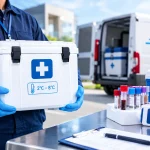

Medical specimens must be transported under the correct temperature conditions to maintain their quality and reliability. Improper temperatures can compromise sample integrity, lead to laboratory rejection, delay test results, and require patients to provide new samples. Temperature-controlled specimen transport helps preserve samples by maintaining the required temperature from collection and pickup through delivery to the testing laboratory.
Ambient Temperature (Room Temperature)
Ambient transportation generally refers to keeping specimens at a controlled room temperature of approximately 15–25°C (59–77°F). Many routine medical samples can be transported under these conditions, depending on laboratory requirements. However, samples must be protected from excessive heat, direct sunlight, and cold outdoor temperatures. Insulated packaging can help maintain a more stable environment and protect specimen quality throughout transit.
Refrigerated Specimen Transport (Chilled)
Refrigerated specimens are generally maintained between 2–8°C (36–46°F) during transportation. Insulated coolers and refrigerant packs help keep samples within this temperature range. To prevent accidental freezing, specimens should be separated from frozen packs using suitable protective materials. Proper packaging helps preserve sample integrity and ensures specimens arrive at the laboratory under the required conditions.
Frozen Specimen Transport
Frozen specimens require carefully controlled conditions to maintain their stability during transportation. They are commonly stored and transported at approximately –20°C (–4°F) or below, depending on laboratory instructions. Dry ice, which maintains a temperature of approximately –78.5°C (–109°F), is often used to keep specimens frozen, particularly during extended deliveries.
Always consult the receiving laboratory’s specimen handling guidelines before arranging transportation. Temperature requirements vary depending on the specific test and specimen, so following the correct instructions is essential for preserving sample integrity and preventing laboratory rejection.
Safe Transportation of Medical Specimens Using Dry Ice
Dry ice is classified as a hazardous material for transportation under UN1845, Class 9, and requires proper handling and packaging. Containers must be designed to allow carbon dioxide gas to escape, as dry ice must never be placed inside an airtight package. Shipments must display the appropriate UN1845 marking and the net weight of dry ice used. Medical courier drivers should receive proper safety training and ensure adequate vehicle ventilation when transporting dry ice to help protect both the specimens and everyone involved in delivery.
Best Practices for Packaging Medical Specimens
Proper packaging plays an important role in maintaining specimen quality during transportation. Follow these best practices to help protect medical samples:
Clearly identify each specimen and specify its required transportation temperature.
Prepare insulated containers and refrigerant packs before placing specimens inside.
Separate ambient, refrigerated, and frozen samples to prevent unwanted temperature changes.
Place specimens in leak-proof secondary packaging with suitable absorbent materials.
Arrange prompt pickup after collection, especially for samples with strict delivery time limits.
Document specimen pickup and delivery times to maintain an accurate transportation record.
Use packaging materials appropriate for the specimen type and the receiving laboratory’s handling instructions.
The Importance of Choosing a Specialized Medical Courier
Transporting medical specimens requires more than standard delivery services. A specialized medical courier understands the importance of temperature control, proper specimen handling, timely delivery, and accurate shipment documentation.
Professional medical couriers use appropriate transportation equipment to maintain required temperature conditions and follow planned routes to minimize transit delays. They also maintain chain-of-custody records to support shipment tracking and accountability throughout the delivery process.
When applicable, medical specimen shipments must follow required packaging and labeling standards, including UN3373 Category B triple packaging requirements. Choosing an experienced medical courier can help healthcare facilities protect specimen integrity and support safe, reliable laboratory deliveries.
For more information about data privacy and regulatory considerations, read our guide to choosing a HIPAA-compliant medical courier.
.
Temperature-Controlled Medical Courier Services in Southern California
Elite BioTransport provides specialized transportation solutions for medical specimens requiring ambient, refrigerated, or frozen conditions. Our transportation equipment includes insulated coolers, dry ice, and multi-compartment containers designed to accommodate different specimen temperature requirements during delivery.
To support shipment visibility and accountability, pickups are monitored through barcode scanning and GPS tracking. Our team also provides 24/7 availability for STAT deliveries and urgent medical courier requests.
Whether your laboratory or healthcare facility needs routine specimen transportation or time-sensitive delivery, Elite BioTransport offers specialized courier solutions throughout Southern California.
Need dependable medical specimen transportation? Explore our temperature-controlled courier services or request a quote for your laboratory or healthcare facility.